
Blood sugar that stays elevated for months or years does more than affect energy levels or appetite. It changes the structure of small blood vessels throughout the body, including the delicate network that supplies the retina, the part of your eye that converts light into images for clear vision.
When those vessels are damaged long enough, the retina can sustain harm that no longer reverses, even after blood sugar comes back under control. This condition, known as diabetic retinopathy, is one of the leading causes of vision loss among adults with diabetes, and it often develops with no early warning signs.
For patients managing type 1 or type 2 diabetes, the retina is often the first place where long-term blood sugar damage becomes visible to an eye doctor, sometimes before a patient notices any change in their own vision. Keep reading to learn more about how you can protect your eye health with diabetes.
How Chronic High Blood Sugar Affects the Retina’s Blood Vessels
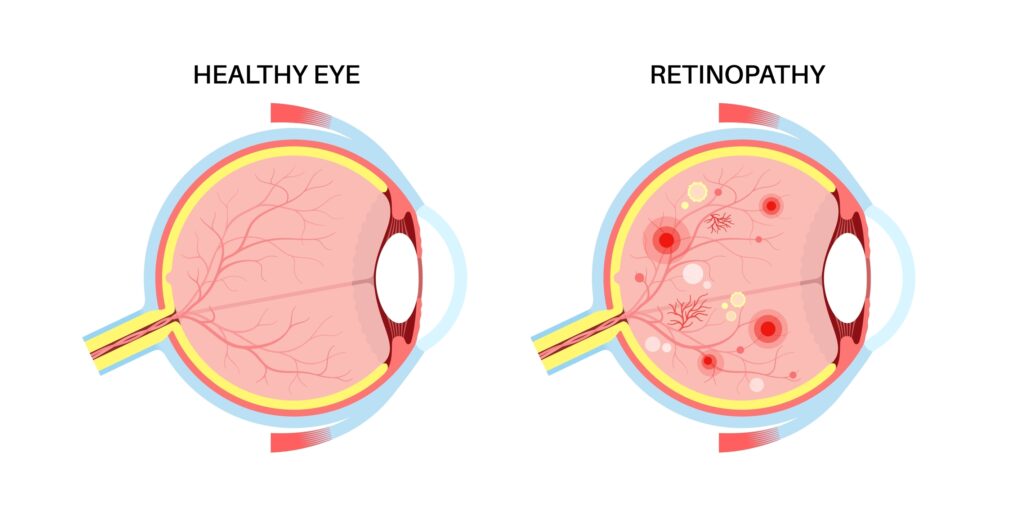
The retina depends on a dense web of small blood vessels to deliver oxygen and nutrients. Glucose that circulates at high levels for extended periods gradually weakens the walls of these vessels. Over time, they may swell, develop tiny bulges called microaneurysms, or begin to leak fluid and blood into the surrounding retinal tissue.
As this leakage builds, the retina can swell, a condition called macular edema, which blurs central vision. In more advanced cases, blood vessels close off entirely, cutting off circulation to portions of the retina. The eye responds by growing new, abnormal blood vessels in an attempt to restore blood flow, but these new vessels are fragile and prone to bleeding into the eye.
Palm Beach Eye Center’s diabetic eye care team monitors patients through each of these stages, since the treatment approach changes considerably depending on how far the disease has progressed.
When Retinal Damage Becomes Permanent
Not every stage of diabetic retinopathy causes lasting harm. Some early changes can stabilize or even partially resolve once blood sugar is brought under tighter control. Damage becomes difficult or impossible to reverse once it reaches certain thresholds.
Early Changes
In the earliest stage, called nonproliferative diabetic retinopathy, blood vessels weaken and leak but haven’t yet closed off in large numbers. Vision may remain normal, or changes may be subtle enough that a patient doesn’t notice them. This is the stage where consistent blood sugar management and close monitoring can prevent further deterioration.
Advanced Disease
Once the disease advances to the proliferative stage, new abnormal blood vessels have already formed, and the risk of permanent vision loss rises sharply. These fragile vessels can bleed into the vitreous, the gel-like substance filling the eye, or pull on the retina as they contract, sometimes leading to a retinal detachment.

Complications That Can Cause Lasting Vision Loss
Scarring on the retina, vessel closure that starves tissue of oxygen, and traction from abnormal vessel growth are among the changes that don’t reverse on their own. When bleeding or scar tissue threatens the retina’s position, a surgical procedure called vitrectomy may be needed to remove the damaged vitreous and relieve pressure on the retina. Surgery at this stage can preserve remaining vision, but it typically cannot restore vision already lost to prolonged blood sugar damage.
Other Retina Conditions Tied to Blood Sugar Control
Diabetic retinopathy isn’t the only retinal condition where blood sugar plays a role. Patients with diabetes face a higher risk of developing cataracts earlier than their peers, and some research points to a connection between poorly controlled blood sugar and a faster progression of macular degeneration, a separate condition that affects central vision as the macula deteriorates with age.
These overlapping risks are part of why ophthalmologists ask about diabetes history during almost every comprehensive eye exam, regardless of the reason for the visit. A patient managing blood sugar well for their overall health is also protecting tissue in the eye that has no capacity to heal from prolonged high glucose exposure.
Protecting the Retina Through Regular Eye Care

Because diabetic retinopathy frequently causes no symptoms until damage has already occurred, the only reliable way to catch it early is through routine, dilated eye exams. During these exams, the specialized eye care team at Palm Beach Eye Center can identify microaneurysms, leakage, and early vessel changes long before a patient experiences blurred vision or floaters.
Patients with diabetes are generally advised to schedule an eye exam at least once a year, and more frequently if retinal changes have already been detected or blood sugar has been difficult to manage. Consistent monitoring allows treatment to begin at the stage when it has the greatest chance of preserving vision, rather than waiting until symptoms become irreversible.
Blood sugar management, coordinated with a primary care physician or endocrinologist, remains the foundation of preventing retinal damage in the first place. But since retinal changes can begin silently and progress before symptoms appear, eye exams serve as the safety net that catches what blood sugar numbers alone cannot reveal.
Have you had a dilated eye exam since your diabetes diagnosis? Schedule an appointment at Palm Beach Eye Center in Lake Worth, FL today!