
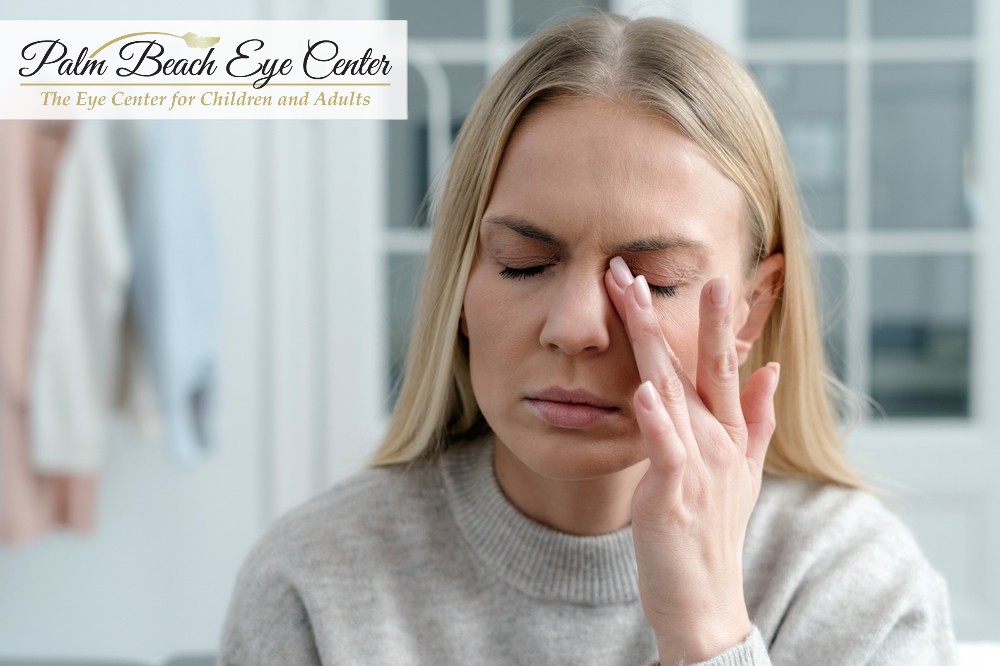
Hormones influence more than mood and sleep; they can also affect the glands that keep the eye’s surface moist and comfortable. More than half of women develop dry eye symptoms as their menstrual cycles slow and eventually stop. For many, the burning, gritty feeling shows up with no obvious explanation, and over-the-counter drops only temporarily soothe the irritation.
Women are more likely than men to develop dry eye syndrome, and hormonal shifts are a major reason why. The team at Palm Beach Eye Center regularly sees women whose symptoms began around perimenopause, during pregnancy, or after starting a new medication. Knowing how hormones and tears are connected can help you make sense of your symptoms and decide when to seek care. Keep reading to learn more about the relationship between hormones and dry eye, and what you can do to find relief.
How Do Hormones Affect the Tear Film?
Every time you blink, a thin film of tears spreads across the front of your eye. That film has three layers: a mucus layer closest to the eye that helps tears cling to the surface, a watery middle layer that supplies moisture, and an oily outer layer that seals everything in and slows evaporation.
The oil comes from the meibomian glands, tiny glands that line the edges of the upper and lower eyelids. These glands respond to sex hormones, including estrogen, progesterone, and testosterone. When those hormone levels drop, the glands produce less oil, and the oil they do make is often thicker and lower quality.
Without a healthy oil layer, tears evaporate too quickly. The eye surface dries out between blinks, and irritation follows. Eye doctors call this evaporative dry eye, the form most often linked to hormonal change.
Struggling oil glands can also lead to inflammation along the eyelid margin. Some women go on to develop blepharitis, or lid disease, which causes redness, itching, and crusting at the base of the lashes and tends to worsen dry eye. The two conditions often feed into each other, so treating one usually means addressing the other.
Life Stages When Hormone Shifts Can Trigger Dry Eye
A woman’s hormone levels change many times over her life. Some changes are temporary, others are permanent, and both can affect eye comfort.
Perimenopause and Menopause
Perimenopause, the years leading up to a woman’s final period, is when many women first notice dry eye. Estrogen and progesterone rise and fall unpredictably during this stage, then settle at lower levels after menopause. Testosterone also declines gradually with age.
Because these lower levels become the new baseline, menopause-related dry eye usually does not improve on its own. Johns Hopkins notes that symptoms generally persist after menopause unless they are managed with over-the-counter care or help from an eye doctor.
Pregnancy, Birth Control, and Other Hormone Changes
Pregnancy brings rapid hormonal shifts. Some women experience dry, irritated eyes or trouble wearing contact lenses during those months. These symptoms often ease after delivery or once breastfeeding ends.
Birth control pills are among the medications that can contribute to dry eye. Autoimmune conditions can also reduce tear production, including Sjögren’s syndrome, which mostly affects women. If your symptoms began around the time of a new prescription or a health change, mention it during your visit.
Symptoms Women Often Notice
Hormone-related dry eye feels different from person to person, but certain symptoms come up again and again:
- A dry, gritty, or sandy feeling, as if something is stuck in the eye
- Burning or stinging
- Redness
- Excessive tearing, which is the eye’s reflex response to irritation
- Sensitivity to light
- Blurred vision that clears briefly with blinking
Many women also notice that their eyes feel worst at certain times. Long stretches on a computer or phone reduce how often you blink, which gives a weak oil layer more time to break down. Wind, ceiling fans, and constant air conditioning, all familiar parts of life in South Florida, speed up evaporation as well. Some women wake up with dry, blurry eyes because tear film problems continue overnight.
Finding Relief for Hormone-Related Dry Eye
Underlying hormone changes cannot be reversed, but the dry eye they cause is usually manageable. Most women do best with a mix of daily habits and, when needed, professional treatment.
For women with dry eye caused by hormonal changes, eye drops with a lipid (oil) component often work the best. A warm compress held over closed eyelids for 8 to 10 minutes before bed can also help, softening thickened oil so it flows more easily from the glands.
Eyelid hygiene matters for everyone, but it can be especially effective for women who wear makeup like eyeliner and mascara, which can contribute to clogged meibomian glands. Thoroughly remove all makeup before bed, then gently cleanse the eyelids with a product made for the eye area to keep the lid margins clear.
Diet can make a difference too. Omega-3 fatty acids, found in fatty fish, flaxseed, and chia seeds, may support better oil quality in tears. Drinking enough water matters as well, since hydration affects tear production, especially in a warm climate.
A few simple lifestyle changes can also reduce flare-ups:
- Take regular breaks from screens and make a point of blinking fully
- Run a humidifier at home, especially in rooms with strong air conditioning
- Wear wraparound sunglasses outdoors to block wind
- Limit contact lens wear if your eyes feel dry by the end of the day
When to See an Eye Doctor
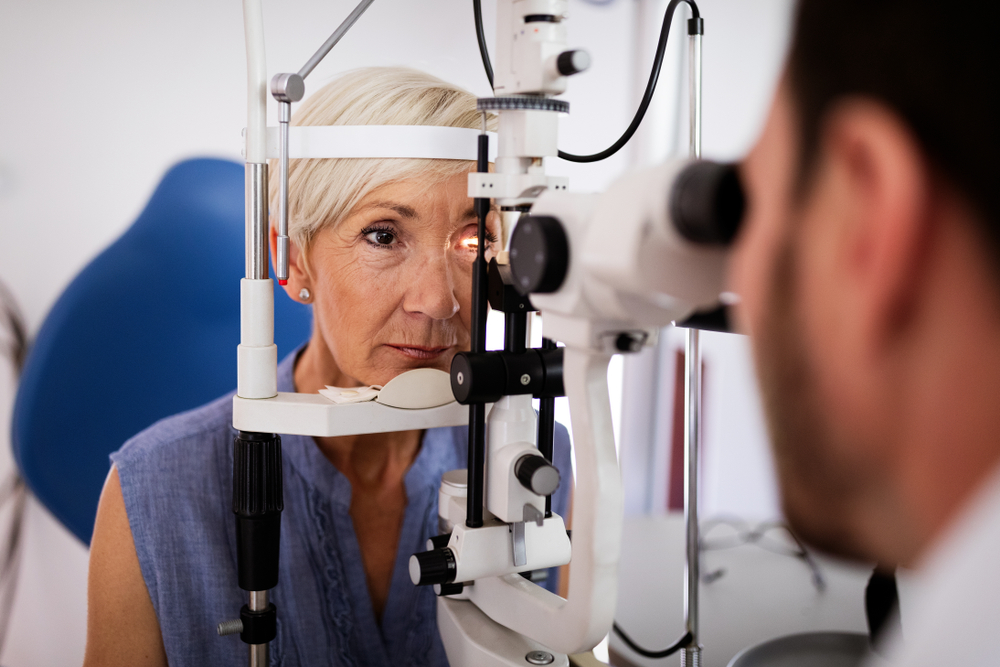
See an eye doctor if symptoms continue despite at-home care, or if you notice eye pain or blurred vision that does not clear with blinking. Ongoing dryness can damage the eye’s surface and increase the risk of infection or corneal scarring.
A comprehensive eye exam lets an ophthalmologist closely examine your tear film, eyelids, and meibomian glands to identify the source of the problem. The team at Palm Beach Eye Center then builds a treatment plan around those findings. Depending on the results, options may include:
- Prescription eye drops that support tear production
- Punctal plugs that help keep natural tears on the eye longer
- LipiFlow® thermal pulsation, which applies controlled heat and gentle pressure to clear blocked oil glands
For women whose dry eye is tied to declining hormones, treating the oil glands directly often brings longer-lasting comfort than drops alone.
Wondering whether hormone changes are behind your dry, irritated eyes? Schedule an appointment at Palm Beach Eye Center in Lake Worth, FL today!

